
Asbestos Removal Newark NJ | Licensed Abatement Specialists
Full-service asbestos abatement for residential and commercial properties throughout Newark and Essex County. NJ-licensed contractors, proper containment setup, and air clearance testing before re-occupancy. Free assessment before any quote.
Quick Answer
Asbestos removal in Newark NJ typically takes 1 to 5 days depending on the scope of the project. Small residential jobs such as a single room of floor tile or a section of pipe insulation are often completed in 1 to 2 days. Larger projects involving multiple materials or commercial buildings require additional time for containment setup, phased removal, and final air clearance testing before the space can be re-occupied.
Why Licensed Removal Matters
Asbestos Abatement in New Jersey Is a Licensed, Regulated Process
In New Jersey, asbestos abatement is not a DIY project and cannot legally be performed by an unlicensed contractor. NJ Admin Code 12:120 governs all asbestos work in the state and establishes the licensing, notification, work practice, and disposal requirements that every removal project must follow.
Asbestos is dangerous when its fibers become airborne. The mineral was widely used in building materials through the 1970s because of its heat resistance and durability, but inhalation of asbestos fibers is a proven cause of mesothelioma, lung cancer, and asbestosis. These diseases have long latency periods, often appearing decades after exposure. There is no safe level of asbestos inhalation, and once fibers are inhaled, the damage cannot be undone.
That is why abatement is regulated so tightly. Licensed contractors must use specific work practices designed to prevent fiber release during removal: negative air pressure containment, full personal protective equipment, wet suppression of materials during removal, and HEPA filtration of the work area air. All removed material must be packaged in approved containers, labeled, and transported to an approved hazardous waste facility. Waste manifests documenting the disposal chain are required by law.
Newark property owners who hire unlicensed contractors or attempt self-removal face serious consequences: fines, required re-remediation at their own cost, liability for any health effects on occupants or workers, and significant complications during any future property sale. The licensed path is also the safe path. For more background on federal asbestos requirements, see the EPA asbestos guidance.
If you have already had asbestos testing completed and received a positive result, this page explains what happens next. If testing has not yet been done, that is the required first step.
The Abatement Process
What to Expect Before, During, and After Asbestos Removal
A properly executed asbestos abatement project follows a defined sequence. Here is how every removal project we conduct in Newark and Essex County is structured.
-
Free Assessment and Written Quote
We begin with a no-obligation site assessment. We review the testing results you have received, inspect the scope of the affected materials, and provide a written quote with a clear scope of work. No abatement work proceeds without your written authorization. We explain what will be removed, what will happen to the space during the work, and what clearance testing is required before re-occupancy.
-
NJ DEP Notification (When Required)
Essex County projects that disturb more than 3 linear feet or 3 square feet of asbestos-containing material require advance notification to the NJ DEP. We manage this notification process on your behalf, file the required documentation, and ensure the project timeline meets the regulatory waiting period before work begins.
-
Containment Setup
Before any asbestos material is disturbed, the work area is sealed using polyethylene sheeting, taped at all openings including doors, windows, HVAC vents, and electrical outlets. A negative air pressure machine with HEPA filtration is installed to maintain lower air pressure inside the containment zone relative to the surrounding area, preventing fiber migration into unaffected spaces. Warning signs are posted per NJ regulations.
-
Asbestos Removal
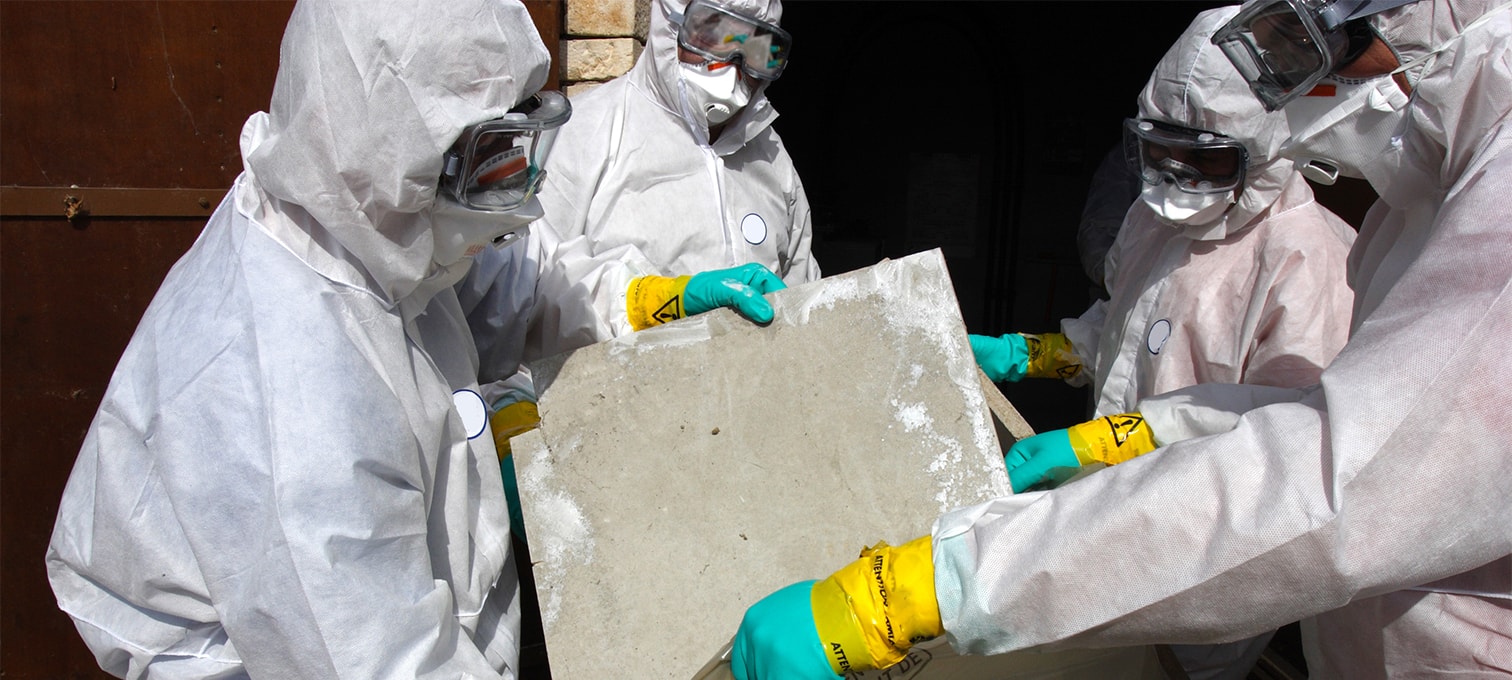
Workers in full PPE (including respirators with HEPA filters, disposable coveralls, and gloves) perform the removal using wet suppression methods to minimize fiber release. Materials are carefully detached, wetted, and sealed immediately into approved double-layer disposal bags or containers. All work is performed using techniques that minimize disturbance of adjacent areas.
-
Decontamination and Waste Removal
The work area is thoroughly decontaminated after material removal. Sealed waste containers are labeled with required asbestos waste labels and transported to a licensed hazardous material disposal facility. We provide waste manifests documenting the disposal chain, which you retain for your records. These documents are essential for any future property transaction.
-
Air Clearance Testing
Before containment is removed and the space is re-occupied, an independent air clearance test is conducted. Air samples are collected inside the containment zone and analyzed by an accredited laboratory. The space is not cleared for re-occupancy until the air clearance test confirms fiber levels below the regulatory standard. We coordinate this testing and provide the clearance documentation with your project file.
Asbestos Materials We Commonly Remove in Newark Properties
Newark’s housing stock is predominantly pre-1980 construction. Row houses, multi-family buildings, two-family homes, and older commercial properties throughout the city contain a wide range of materials that may contain asbestos. We remove all confirmed asbestos-containing materials, including:
- Popcorn and spray-applied ceiling texture (more on popcorn ceiling removal)
- Vinyl floor tiles (VAT) and tile adhesive (more on floor tile removal)
- Pipe wrap and boiler insulation (more on pipe insulation removal)
- Drywall joint compound
- Roofing felt and shingles
- Window caulking and glazing
- Textured wall coatings and plaster
- Duct insulation
When Removal Is Required vs. When Encapsulation Is an Option
Not every asbestos-containing material must be removed. NJ regulations allow encapsulation (sealing materials in place) when the material is in good condition, is non-friable, and will not be disturbed by planned work. Encapsulation is generally less disruptive and less costly than full removal.
However, encapsulation is not always appropriate. If the material is friable (easily crumbled), in deteriorated condition, or must be penetrated or disturbed as part of planned renovation or demolition work, removal is required. We assess each situation on its merits and recommend the compliant, cost-effective approach.
See our page on asbestos encapsulation for a full explanation of when it is appropriate and what the process involves.
Newark-Specific Context: Why This City Has High Abatement Demand
Newark is one of the oldest cities in the United States, and its housing and commercial building stock reflects that history. A significant portion of Newark’s residential properties were built before the federal asbestos bans of the late 1970s, when asbestos was a routine component of dozens of building materials.
The city’s ongoing revitalization has accelerated renovation activity across neighborhoods including the Ironbound, Forest Hill, Weequahic, and the Central Ward. Every renovation project in a pre-1980 building is a potential asbestos event. Many property owners and general contractors who are unfamiliar with NJ abatement law discover the requirement only after work has already begun, which creates remediation and compliance complications.
We work regularly with Newark landlords, homeowners undertaking renovations, estate executors managing inherited properties, and general contractors preparing buildings for gut renovation. We also work with commercial property owners in Newark’s growing office, warehouse, and mixed-use development areas. If your project is in Newark or surrounding Essex County, and your building predates 1980, call us before work begins.
Free assessment before any quote. We never charge for the initial site assessment and consultation. You will receive a clear written scope of work and a firm price before any formal engagement begins. Call (973) 561-2655 or submit a request online.
Common Questions
Asbestos Removal Questions
Most residential asbestos removal projects in Newark take 1 to 5 days from work start to air clearance. Small-scope jobs involving a single material type in one area, such as a bathroom floor tile removal or a section of pipe insulation in a basement, typically complete in 1 to 2 days. Larger projects involving multiple rooms, multiple material types, or entire floors of a building take 3 to 5 days or more. Commercial abatement projects are scoped individually and timelines vary significantly based on building size and complexity. We provide a realistic project timeline with every written quote so you can plan your renovation schedule accordingly.
In most cases, occupants must vacate the affected areas and typically the entire home during active asbestos abatement. The containment setup isolates the work area, but as a precaution, residents, pets, and anyone not involved in the abatement work should not be in the building during active removal. In some cases where the work area is a truly isolated part of a large building, partial occupancy may be appropriate. We discuss this with you during the assessment and make a specific recommendation based on the layout of your property, the scope of work, and the location of the affected materials. Re-occupancy is permitted only after a passing air clearance test.
After completing an abatement project, we provide: a written scope-of-work completion document, waste disposal manifests documenting that all asbestos-containing waste was transported to and accepted by a licensed hazardous waste facility, and the air clearance test report showing fiber counts below the required threshold. These documents are critical for your records. They are frequently requested during property sales, insurance claims, and any subsequent renovation permitting. Keep them with your property records permanently. We also retain copies in our project files.
In New Jersey, unlicensed asbestos abatement is a violation of NJ Admin Code 12:120 and can result in significant fines, stop-work orders, and mandatory remediation. Property owners who knowingly allow unlicensed abatement to proceed can face personal liability. If an unlicensed removal is discovered during a property transaction, the sale may be delayed or derailed while an emergency remediation is completed. The property owner may also be liable for any health claims from workers or occupants exposed during the improper removal. The cost of a licensed abatement project is almost always far less than the cost of dealing with the aftermath of an unlicensed one. Always verify your contractor’s NJ asbestos license before work begins.
Service Area
Serving Newark and Essex County Communities
Licensed asbestos removal and abatement for residential and commercial properties throughout the region.