
Asbestos Encapsulation Newark NJ | When Removal Is Not the Only Option
Licensed asbestos encapsulation for intact, non-friable materials in Newark and Essex County properties. A compliant, less disruptive alternative to removal when conditions are appropriate. Licensed NJ contractors, documentation provided.
Quick Answer
Asbestos encapsulation in Newark NJ seals asbestos-containing materials in place using an approved encapsulant coating, preventing fiber release without physical removal. It is a compliant option under NJ regulations when the material is in good, stable condition, is non-friable, and will not be disturbed by planned work. Most encapsulation projects take 1 to 2 days. Encapsulated materials must be documented and monitored over time.
What Encapsulation Is
Encapsulation Seals Asbestos in Place Instead of Removing It
Asbestos becomes dangerous when its fibers are released into the air. Encapsulation works by sealing asbestos-containing materials with a penetrating or bridging encapsulant, binding the fibers and creating a protective barrier that prevents release under normal conditions.
This approach is recognized under NJ Admin Code 12:120 as a legitimate asbestos management strategy when the conditions are right. The key conditions that make encapsulation appropriate rather than removal include: the material must be in good physical condition with no crumbling, flaking, or delamination; the material must be non-friable (not easily crumbled by hand pressure); and the material must not be scheduled for disturbance by any planned renovation or demolition work in the near future.
Encapsulation is not a permanent elimination of the hazard. It is an in-place management solution that requires ongoing monitoring and a documented O&M (Operations and Maintenance) plan. The encapsulated material remains in the building, and future owners or contractors must be informed of its presence and location. If the material ever deteriorates or is later disturbed by renovation work, it will need to be addressed at that time through proper abatement.
For a full understanding of the abatement path when encapsulation is not appropriate, see our page on asbestos removal in Newark NJ.
Encapsulation vs. Removal: How We Determine the Right Approach
When Encapsulation Is Appropriate
- The asbestos-containing material is in good, stable condition with no visible deterioration
- The material is non-friable and will not be disturbed during planned work
- The area where the material is located is accessible for regular visual inspection
- The property owner is prepared to implement a monitoring plan and maintain records
- The building is not scheduled for demolition or gut renovation in the near term
Common candidates for encapsulation include intact vinyl floor tiles that will be covered rather than removed, pipe insulation in accessible basement areas that is in good condition, and roofing materials that are undamaged and will not be disturbed.
When Removal Is Required Instead
- The material is friable (crumbles easily) or is already releasing fibers
- The material is visibly deteriorated, delaminating, or water-damaged
- Planned renovation or demolition work will disturb the material
- The material is in an area with high foot traffic or regular maintenance disturbance
- The building is being prepared for sale, demolition, or major renovation
When removal is the appropriate choice, we handle the full licensed abatement process including containment, removal, waste disposal, and air clearance testing. See our asbestos removal page for full details.
The Encapsulation Process
What Our Encapsulation Service Includes
-
Licensed Assessment and Material Condition Evaluation
We begin with a thorough inspection of the confirmed asbestos-containing material. We assess its physical condition, friability, location, and the planned use of the space. This determines whether encapsulation is an appropriate and compliant option for your specific situation.
-
Selection of Appropriate Encapsulant
Different materials require different encapsulation approaches. Penetrating encapsulants are used for porous materials, binding fibers throughout the material’s depth. Bridging encapsulants create a membrane over the surface. We select the appropriate product for the material type and condition.
-
Surface Preparation and Application
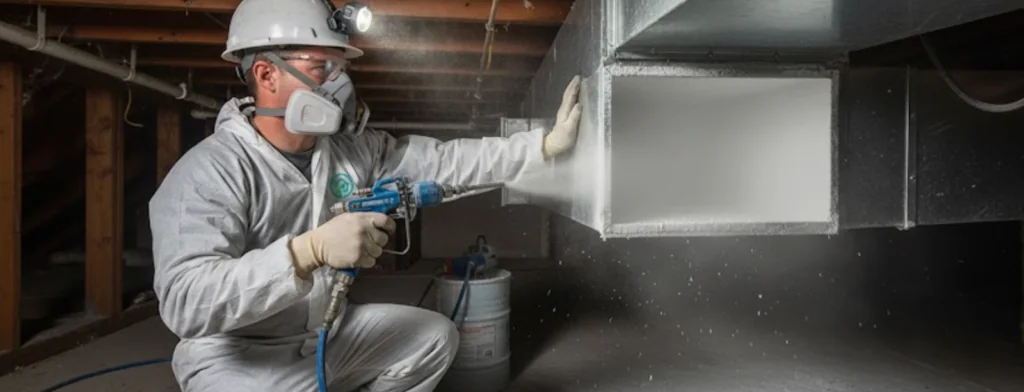
Workers in appropriate PPE prepare the material surface and apply the encapsulant per the manufacturer’s specifications. The work area is properly prepared to prevent incidental fiber release during application. Application is thorough, covering all exposed surfaces of the affected material.
-
Documentation and O&M Plan
After encapsulation, we provide written documentation of the work performed, the materials treated, the encapsulant used, and the location of all encapsulated ACM. We also provide an Operations and Maintenance (O&M) plan specifying how the material should be monitored over time and what to do if its condition changes. This documentation is critical for future property transactions and for informing future contractors who work in the space.
What Property Owners Should Understand About Encapsulated Asbestos
Choosing encapsulation over removal is a legitimate, legally recognized strategy in New Jersey, but it comes with ongoing responsibilities that property owners need to understand before proceeding.
First, the location and condition of all encapsulated materials must be documented and that documentation must be maintained with the property records. When the property is sold, the disclosure obligations around known asbestos apply to encapsulated materials just as they would to any other confirmed ACM. A buyer’s inspector or contractor who enters a space and encounters encapsulated pipe insulation or floor tiles without knowing what they are may inadvertently disturb them.
Second, encapsulated materials require periodic visual inspection. If the encapsulant coating shows signs of peeling, cracking, or delamination, or if the underlying material shows deterioration, the situation must be re-evaluated by a licensed inspector. Encapsulation is not a one-time fix that eliminates the monitoring obligation.
Third, any future renovation or demolition work that would disturb the encapsulated material will require licensed abatement at that time. The encapsulation documentation you maintain will inform future contractors of exactly what they are dealing with and where it is located.
If you are uncertain whether encapsulation or removal is the right choice for your property, start with our free assessment. We will review your testing results, inspect the conditions of the affected materials, and give you a clear recommendation. If you have not had asbestos testing done yet, that is the necessary first step. Contact us at (973) 561-2655 or through our online contact form.
Common Questions
Asbestos Encapsulation Questions
Yes. Asbestos encapsulation is a recognized and legally compliant asbestos management strategy under NJ Admin Code 12:120, provided it is performed by a licensed NJ asbestos contractor and the material meets the conditions that make encapsulation appropriate. It is not a workaround or a shortcut; it is a regulated abatement response that comes with specific documentation and monitoring requirements. The key requirements are that the material must be in good condition, non-friable, and not subject to disturbance by planned work. If those conditions are not met, removal is required.
Encapsulation is generally less costly and less disruptive than full removal when the conditions are appropriate for it. It does not require the same level of containment setup or air clearance testing that removal does, and the project timeline is typically shorter (1 to 2 days for most residential projects). However, encapsulation is not always the lower-cost choice over the long term. If the material deteriorates or requires re-treatment, or if planned future renovations ultimately require removal anyway, the total cost may exceed what a one-time removal would have cost. We provide honest assessments of both options, including projected long-term considerations, so you can make an informed decision.
Yes. New Jersey property sellers are required to disclose known hazardous conditions, and confirmed asbestos-containing materials, whether removed, encapsulated, or still untreated, are typically within the scope of that disclosure obligation. Encapsulation documentation identifies the location and condition of the treated materials, which you provide to buyers as part of the disclosure package. This actually works in your favor: documented, professionally encapsulated asbestos is a more reassuring disclosure than undocumented or untreated ACM. Buyers, their inspectors, and their lenders can review the documentation and understand exactly what was done. Consult your real estate attorney for guidance specific to your transaction.
The longevity of an encapsulant coating depends on the product used, the material it was applied to, environmental conditions in the space (moisture, temperature swings, physical contact), and the quality of the original application. Many encapsulants are designed to remain effective for 10 to 20 years under normal indoor conditions. However, periodic visual inspection is required regardless of product life expectancy. If you observe any peeling, cracking, or deterioration of the encapsulant, or any change in the condition of the underlying material, the situation should be re-evaluated by a licensed inspector promptly. This is why the O&M monitoring plan we provide with every encapsulation project is important to follow.
Service Area