
Planning a Renovation in Newark NJ? Here Is What You Need to Know About Asbestos
Renovation projects in pre-1980 Newark homes and buildings require asbestos testing before work begins. This guide explains what triggers the requirement, what the process looks like, and how to sequence abatement into your renovation timeline.
Quick Answer
Any renovation in a Newark NJ building constructed before 1980 that could disturb flooring, ceilings, pipe insulation, or drywall must be preceded by asbestos testing by a licensed NJ inspector. If asbestos-containing materials are found, licensed abatement must be completed and air clearance must pass before the renovation contractor can work in that area. NJ Admin Code 12:120 requires this sequence without exception.
Why Renovation Is the Highest-Risk Activity for Asbestos Exposure
Asbestos-containing materials that are intact and undisturbed release very few fibers under normal conditions. The danger comes from disturbance: cutting, grinding, scraping, sanding, drilling, and demolition all release fibers from materials that would otherwise be stable. Renovation is exactly the kind of activity that disturbs asbestos-containing materials, and it often involves multiple material categories at once.
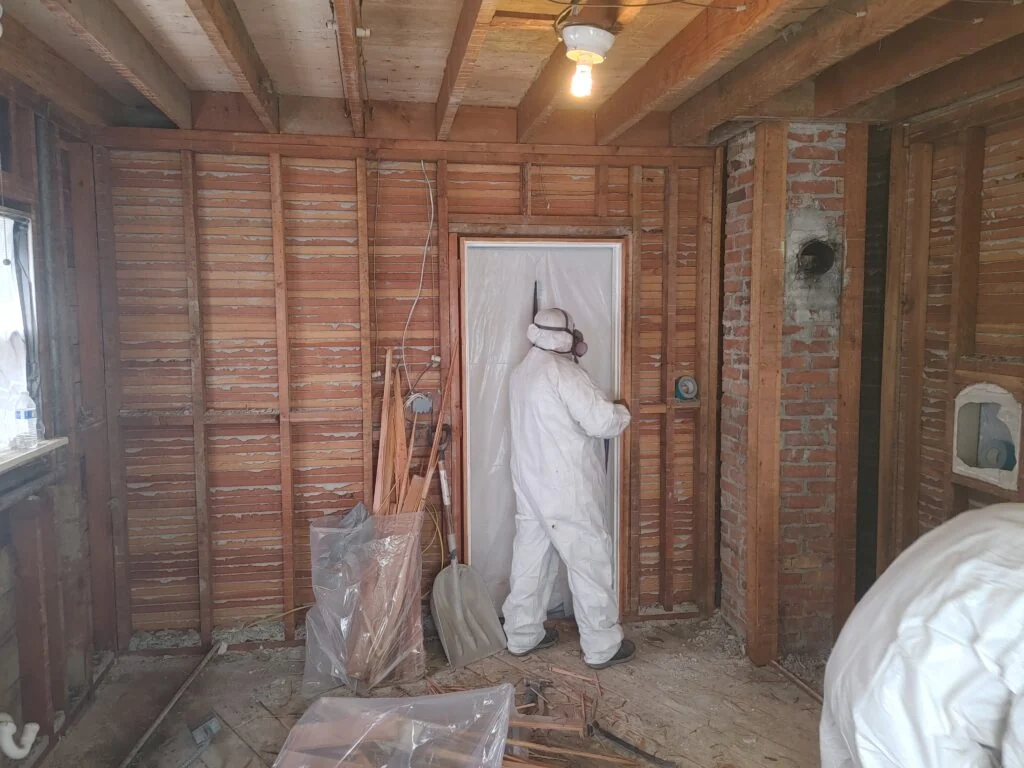
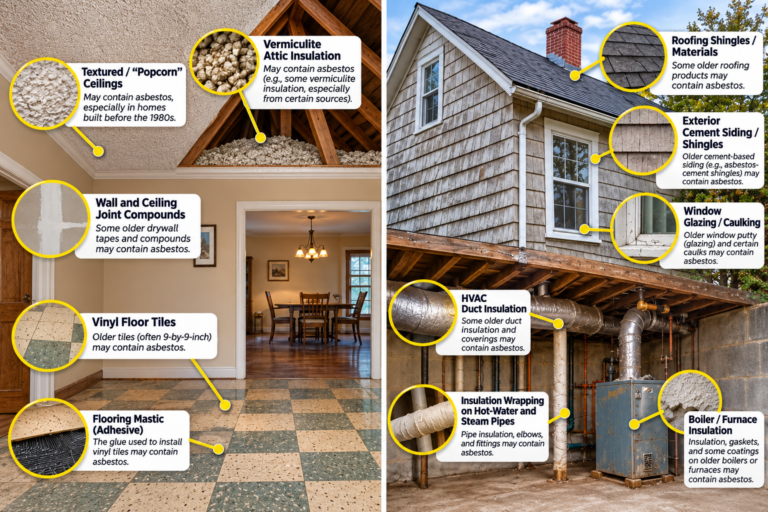
Consider a typical Newark kitchen renovation in a 1965 home: the project might involve removing floor tiles (potential VAT), taking down the original ceiling (potential texture or plaster with asbestos additives), opening walls (potential asbestos-containing drywall joint compound), and working near the basement entry where pipe insulation may run. In a single renovation project, you could encounter asbestos in 4 or 5 different materials without realizing it.
The legal framework in New Jersey reflects this reality. NJ Admin Code 12:120 requires testing before renovation or demolition that could disturb suspect asbestos-containing materials in buildings that predate the era of regulatory restrictions. For most practical purposes, that means pre-1980 buildings in Newark, though some materials in buildings constructed slightly after 1980 may also contain asbestos if pre-ban products were used.
Which Renovation Projects Require Asbestos Testing in Newark
The straightforward rule: any renovation in a pre-1980 Newark building that involves disturbance of any of the following materials requires asbestos testing first.
- Floor tile or flooring underlayment removal or disturbance
- Ceiling work, including scraping, patching, or removing textured ceiling coatings
- Drywall removal, sanding, or significant repair in pre-1977 construction
- Any work involving pipe insulation, boiler insulation, or duct insulation
- Roof or siding removal on pre-1980 buildings
- Plaster wall or ceiling removal
- Any demolition of interior spaces in pre-1980 buildings
If you are planning a renovation that involves any of these elements in a Newark building that was constructed before 1980, the first step is an asbestos inspection of the affected areas.
What does not necessarily trigger the requirement: cosmetic work that does not disturb these materials, such as painting over intact surfaces, replacing fixtures that do not require wall or ceiling disturbance, or replacing cabinet hardware. However, if a cosmetic project requires any drilling, cutting, or material removal in a pre-1980 building, the requirement may still apply.
How to Sequence Asbestos Testing into Your Renovation
The most common mistake Newark property owners make is treating asbestos testing as an afterthought, something to address if a problem turns up, rather than a required first step. Here is the correct sequence for any renovation in a pre-1980 Newark building.
Step 1: Contact a Licensed Inspector Before Hiring the Renovation Contractor
Before you begin getting renovation quotes, contact a licensed NJ asbestos inspector for a pre-renovation assessment. The inspector visits the property, identifies all suspect materials in the planned work area, collects samples, and submits them for laboratory analysis. Results typically come back within 24 to 72 hours. This step should happen before you lock in your renovation contractor’s schedule.
Step 2: Review the Results and Plan Your Scope
If the inspection finds no asbestos-containing materials in the work area, your renovation can proceed. If ACM is found, the abatement scope is determined based on the quantity and location of the materials. The abatement contractor provides a written scope of work and pricing. Your renovation contractor cannot begin work in the affected areas until abatement is complete and cleared.
Step 3: Schedule Abatement Before the Renovation Contractor
Abatement must be completed, air clearance must pass, and the work area must be released before your renovation contractor begins work in that area. Factor this into your project timeline. For most residential projects, abatement takes 1 to 3 days and clearance results come back within 24 hours. Build a one-week buffer into your renovation schedule for asbestos abatement and clearance.
Step 4: Receive Documentation Before Final Payment
Before you finalize payment to the abatement contractor, make sure you have the complete documentation package: the inspection report, the abatement scope and contractor certifications, waste disposal manifests, and the signed air clearance report. Store these permanently with the property records. They protect you in any future property transaction or liability situation.
When Your Renovation Contractor Discovers Something Mid-Project
Sometimes suspect materials turn up after work has already begun. A renovation contractor removes flooring and finds what appears to be VAT beneath it. A wall is opened and fragmented insulation material falls out. This is not uncommon in Newark’s older building stock, where multiple renovation generations may have buried older materials under newer finishes.
The correct response: stop work in the affected area immediately. Do not continue disturbing the material. Do not attempt to clean it up or remove it. Call a licensed asbestos inspector the same day for an emergency assessment. If the material tests positive, abatement must occur before renovation can continue in that area.
This creates a delay and adds cost. The alternative, continuing to disturb potentially asbestos-containing material, creates a hazard for every person on the job site and a significant liability exposure for the property owner. Stop, test, and sequence properly.
Common Questions
Asbestos and Newark Renovations: FAQ
No. A contractor’s experience without documented testing does not change the legal requirement under NJ Admin Code 12:120, and it does not change the physical reality that asbestos may be present even when it is not visible. Many asbestos-containing materials look identical to non-asbestos materials: VAT looks like regular vinyl tile, asbestos-containing joint compound looks like any other joint compound, asbestos pipe wrap looks like ordinary insulation. Visual inspection cannot identify asbestos. Only laboratory analysis of a collected sample can. A contractor who has been proceeding without testing may have been disturbing asbestos-containing materials throughout those hundreds of jobs without documentation or proper protection. That is a problem for their workers and for the property owners, regardless of whether anyone knows about it.
For a typical Newark residential renovation, the sequence from initial inspection to cleared work area runs roughly as follows: the inspection takes 2 to 4 hours on-site, lab results come back in 24 to 72 hours, and abatement (if needed) takes 1 to 3 days for a standard scope, followed by air clearance results the following day. From the day you call for an inspection to the day the work area is cleared and released to the renovation contractor is typically 5 to 10 business days for most residential projects. Build this into your timeline at the project planning stage, not as an emergency after your renovation contractor is already scheduled and on-site.
Yes, with proper containment and a completed abatement sequence for the specific work area. Asbestos abatement work areas are isolated with negative-pressure containment barriers that prevent fibers from migrating to adjacent occupied spaces. After abatement is complete and air clearance passes in the work area, renovation can proceed in that contained area while the rest of the home remains occupied. For projects that involve significant disruption or that generate high dust levels even after abatement, temporary relocation of residents during the active renovation phase is often the safer and more practical choice. We can advise on this for your specific project.
4 Comments